How to Grow Tomato
IntermediateSolanum lycopersicum
A warm-season staple. Thrives in full sun with consistent watering. Stake or cage plants as they grow.
Last updated: June 2026
Choosing the Right Variety
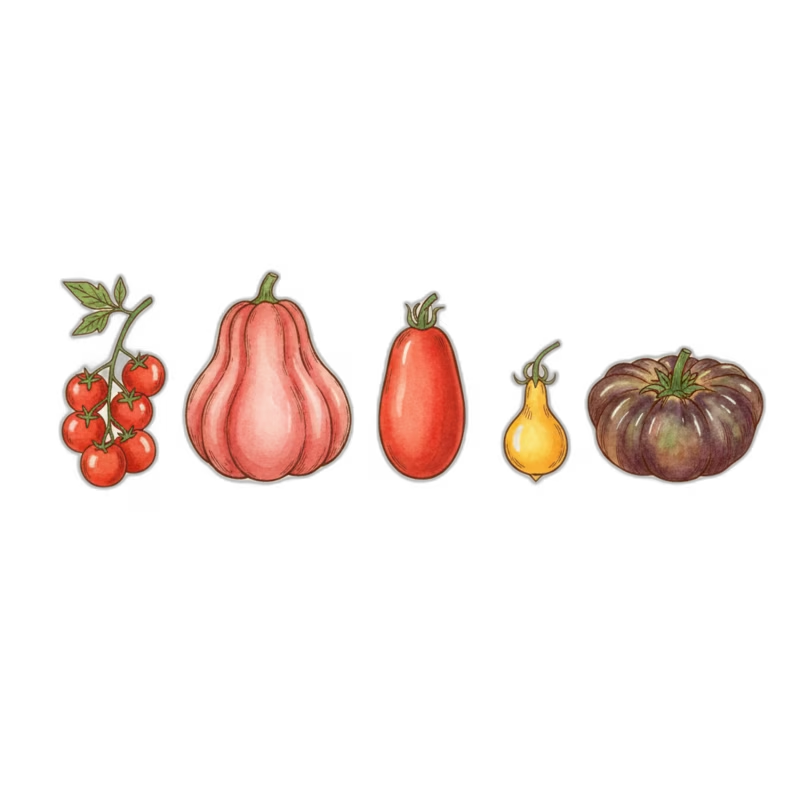
Tomatoes come in two growth habits, and the difference will shape how you plan your bed. Determinate (bush) varieties grow to a fixed height, set all their fruit in a concentrated window, then stop. Good for canning and small spaces. Indeterminate (vining) types keep growing and producing fruit until frost kills them. Most heirloom slicers and cherry tomatoes are indeterminate.
Beyond growth habit, pick varieties that match what you want from your harvest. Cherry and grape tomatoes (Sun Gold, Sweet 100, Juliet) are the easiest to grow and produce reliably even in tough seasons. Slicers (Better Boy, Celebrity, Early Girl) give you the classic sandwich tomato. Beefsteaks (Brandywine, Cherokee Purple, Mortgage Lifter) produce the largest fruit with complex flavor, but take longer and demand more patience. Paste tomatoes (San Marzano, Roma, Amish Paste) have dense, low-moisture flesh ideal for sauces and canning.
Starting from Seed
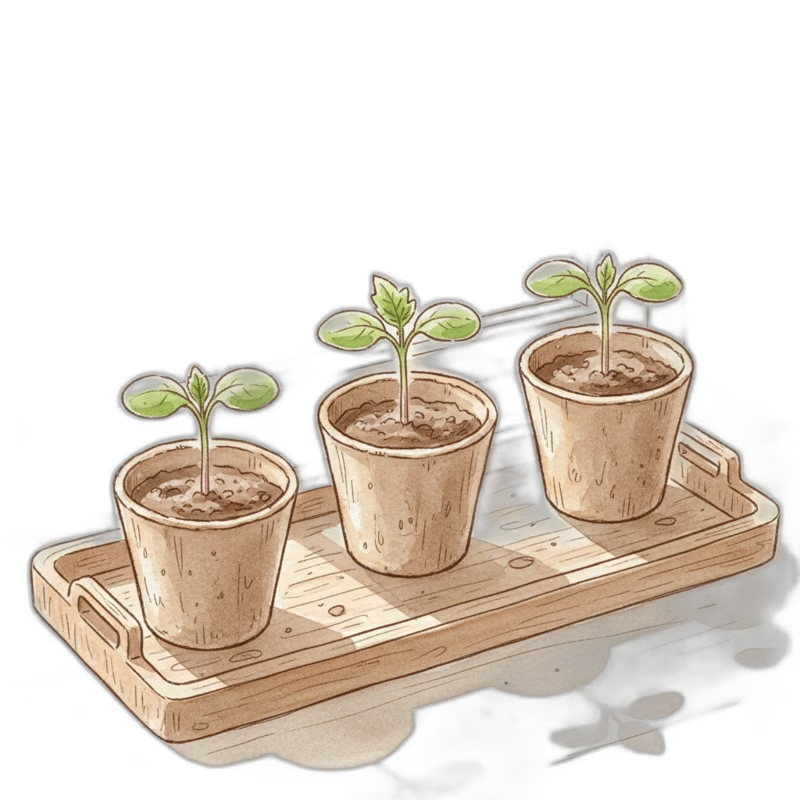
Start tomato seeds indoors 6–8 weeks before your last frost date. Plant seeds ¼" deep in a sterile seed-starting mix, keep the soil consistently moist (not soggy), and maintain temperatures of 70–80°F. Seeds germinate in 6–14 days. Once sprouts appear, they need strong light: at least 14–16 hours daily under grow lights, or a bright south-facing window.
When seedlings develop their first set of true leaves (the second pair, with serrated edges), transplant them into individual 3–4" pots. Bury the stems up to the lowest leaves — tomatoes form adventitious roots along buried stems, which builds a stronger root system.
Harden off seedlings for 7–10 days before transplanting outdoors. Start with 1–2 hours of outdoor shade, gradually increasing exposure to direct sunlight and wind each day.
Transplanting & Spacing
Transplant after all danger of frost has passed and nighttime temperatures stay consistently above 50°F. In square foot gardening, each tomato gets one full square foot. They need the space. Plant them deep: bury two-thirds of the stem. The buried portion will develop roots, giving the plant a much stronger root system from day one.
Place tall varieties on the north side of your bed so they don’t shade shorter crops. Tomatoes pair well with basil (plant it in the adjacent square), which may repel aphids and whiteflies.
1 per square foot
Each tomato gets an entire 12″×12″ square. They’re big plants that need room for airflow and root spread.
View full spacing chart →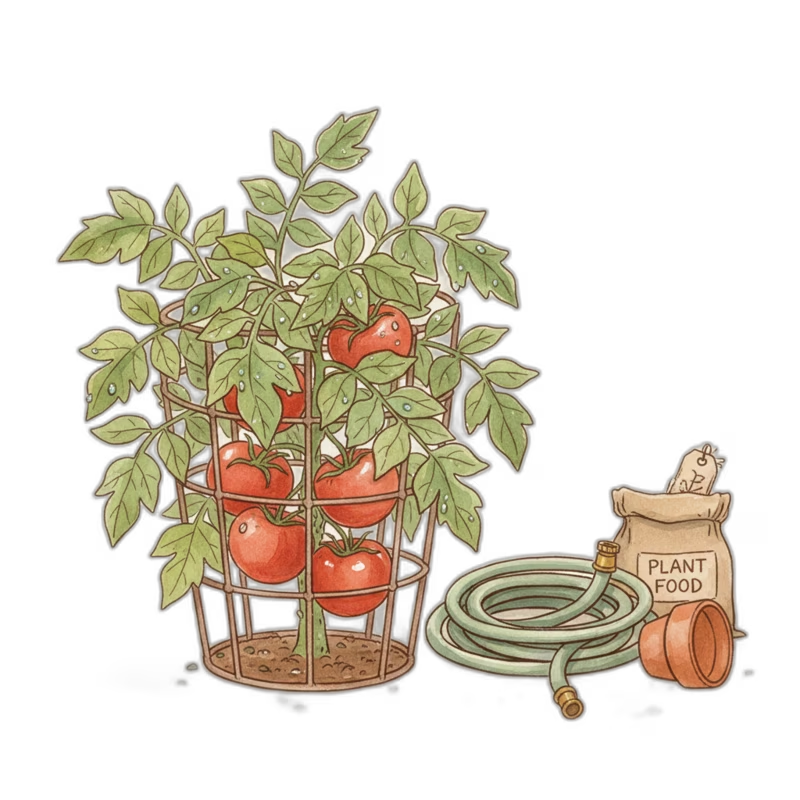
Support & Training
Every tomato plant needs support. Without it, fruit rests on soil and rots. Your options:
- Cages: the easiest approach. Use sturdy 5-foot concrete reinforcing wire cages (not the flimsy cone-shaped ones from hardware stores). One cage per plant, set at transplanting time.
- Stakes: drive a 6-foot stake 12" into the soil beside each plant. Tie the main stem loosely with soft cloth or garden twine as it grows.
- Florida weave: best for rows. Run twine between end stakes, weaving between plants on alternating sides. Add a new level of twine every 8–10" of growth.
For indeterminate varieties, prune suckers (the shoots that grow in the crotch between the main stem and a branch). Removing suckers below the first flower cluster directs energy into fruit production. Above the first cluster, you can leave some suckers for extra yield.
Watering & Feeding
Tomatoes need deep, consistent watering: about 1–2" per week. Water at the base of the plant, never overhead, to prevent foliar diseases. Mulch heavily (3–4" of straw or shredded leaves) to maintain soil moisture and keep roots cool.
Fertilize at transplanting with a balanced or phosphorus-heavy starter fertilizer. Once fruit begins to set, side-dress every 3–4 weeks with compost or a balanced organic fertilizer. Tomatoes are heavy feeders, but too much nitrogen produces lush foliage at the expense of fruit.
Common Problems
Blossom End Rot
Dark, sunken spots on the bottom of the fruit. This is a calcium uptake issue caused by inconsistent watering in the vast majority of cases — not a lack of calcium in the soil. Mulch heavily and water on a schedule. In rare cases, very acidic soil (pH below 5.5) or heavy ammonium-nitrogen fertilization can also block calcium uptake even with consistent moisture.
Early Blight
Brown spots with concentric rings on lower leaves, progressing upward. Remove affected leaves promptly, improve air circulation by pruning lower branches, and mulch to prevent soil splash. Resistant varieties (Celebrity, Mountain Magic) help.
Cracking
Heavy rain after a dry spell causes fruit to absorb water faster than the skin can expand. Consistent watering and mulching prevent this. Harvest mature fruit before expected storms when possible.
Hornworms
Large green caterpillars that can strip a plant overnight. Hand-pick them (they’re large enough to spot easily). If you see a hornworm covered in small white projections, leave it alone. Those are braconid wasp cocoons — the larvae have already fed on the hornworm internally and are pupating on its surface. The hornworm is doomed, and the emerging wasps will parasitize more hornworms in your garden.
Late Blight
Unlike early blight, late blight is fast-moving and can destroy an entire plant in days. Symptoms: large, dark, water-soaked patches on leaves and stems, often with white mold on the underside in humid conditions. Remove affected plants immediately. Do not compost them. Copper-based fungicides applied preventively can help in regions where late blight is common.
Blossom Drop
Flowers fall off without setting fruit. This usually happens when nighttime temperatures drop below 55°F or rise above 75°F, disrupting pollination. High humidity and excessive nitrogen also contribute. It’s temporary. Fruit set resumes once temperatures moderate.
Harvesting
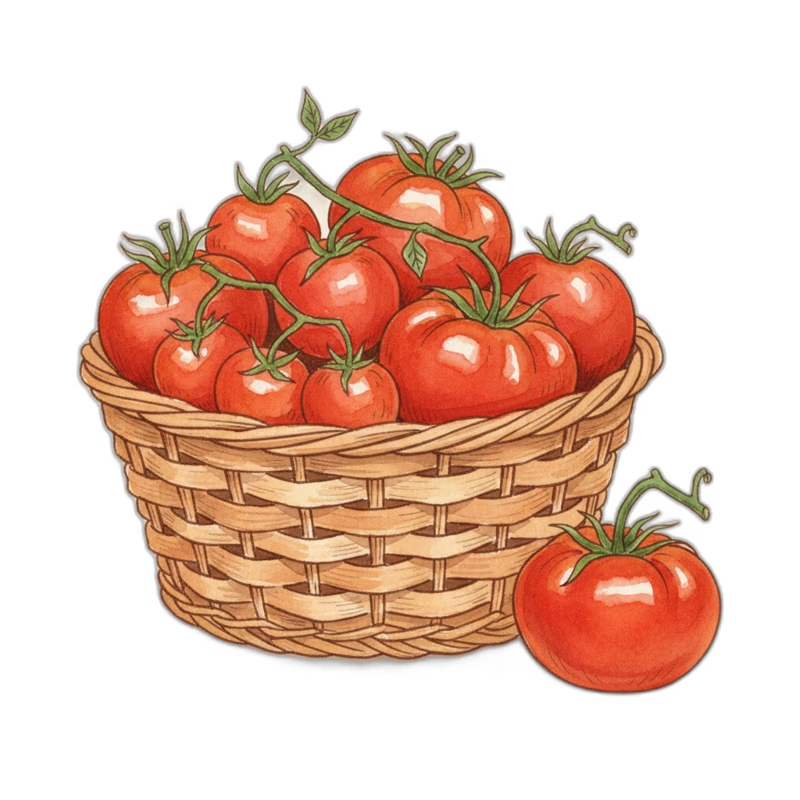
Pick tomatoes when they are fully colored and slightly soft to the touch. They’ll continue to ripen off the vine. Cherry tomatoes should come off easily with a gentle twist; slicers can be cut with a stem stub attached.
Never refrigerate fresh tomatoes. Cold temperatures destroy volatile flavor compounds. Store at room temperature, stem-side down. If you have more than you can eat, tomatoes freeze well: just wash, core, and freeze whole in bags. The skins slip off after thawing.
At the end of the season, when frost threatens, pick all remaining fruit, including green tomatoes. Wrap green ones individually in newspaper and store in a cool, dark place. They’ll ripen slowly over 2–4 weeks. Or slice green tomatoes, bread, and fry them.
Frequently Asked Questions
How much water do tomatoes need per week?
Tomatoes need 1–2 inches of water per week, delivered at the base of the plant. In hot weather (above 90°F) or windy conditions, they may need more. The key is consistency. A deep soak every few days beats light daily watering, which encourages shallow roots.
What causes blossom end rot on tomatoes?
Blossom end rot looks like calcium deficiency, but it’s almost always a water problem. When soil moisture swings between dry and saturated, roots can’t absorb calcium fast enough to feed developing fruit. Consistent moisture and mulch fix it, not calcium sprays.
When should I start tomato seeds indoors?
Start tomato seeds indoors 6–8 weeks before your last frost date. Plant seeds ¼ inch deep in sterile seed-starting mix at 70–80°F. Seeds germinate in 6–14 days.
How many tomato plants per square foot?
One tomato plant per square foot. Tomatoes are large plants that need the full 12×12 inch square for root spread and airflow. Place tall varieties on the north side of the bed.
Should I prune tomato suckers?
For indeterminate varieties, remove suckers below the first flower cluster to direct energy into fruit production. Above the first cluster, you can leave some suckers for extra yield. Determinate varieties should not have suckers removed (they fruit on branch tips, so removing suckers reduces yield), but stripping lower leaves below the first fruit cluster still helps with airflow and blight prevention.
Varieties & Cultivars
31 cultivars in our database. Click any card to see growing details.
Cherry & Grape
(6)
Campari
70–75 days
Hybrid
exceptionally high Brix sugar content (8-9); cluster-fruiting; VF TMV resistant
- Height
- 60–72" (152–183 cm)
- Yield / plant
- —
- Avg fruit
- 2.1 oz (60 g)
- Support
- vertical
- Harvest
- continuous
- USDA Zones
- 3–11
- Seed saving
- difficult
- Seed viability
- 4 years
Juliet
60–70 days
Hybrid
elongated cherry hybrid; 1999 AAS winner; sweet and crack-resistant; prolific clusters
- Height
- 60–72" (152–183 cm)
- Yield / plant
- —
- Avg fruit
- 1.0 oz (28 g)
- Support
- vertical
- Harvest
- continuous
- USDA Zones
- 3–11
- Seed saving
- difficult
- Seed viability
- 4 years
Red Grape
70–75 days
Open-Pollinated
small oval fruit in clusters; sweet firm flavour; crack resistant; good for snacking
- Height
- 60–72" (152–183 cm)
- Yield / plant
- —
- Avg fruit
- 0.5 oz (14 g)
- Support
- vertical
- Harvest
- continuous
- USDA Zones
- 3–11
- Seed saving
- moderate
- Seed viability
- 4 years
Sun Gold Cherry
55–65 days
Hybrid
- Height
- 60–96" (152–244 cm)
- Yield / plant
- —
- Avg fruit
- 0.6 oz (18 g)
- Support
- vertical
- Harvest
- continuous
- USDA Zones
- 3–11
- Seed saving
- difficult
- Seed viability
- 4 years
Sweet 100
60–65 days
Hybrid
hybrid; extremely sweet and prolific in long clusters; VF resistant
- Height
- 72–120" (183–305 cm)
- Yield / plant
- —
- Avg fruit
- 0.4 oz (10 g)
- Support
- vertical
- Harvest
- continuous
- USDA Zones
- 3–11
- Seed saving
- difficult
- Seed viability
- 4 years
Yellow Pear
75–80 days
Open-Pollinated
heirloom pre-1800s; mild sweet flavour; extremely prolific
- Height
- 72–120" (183–305 cm)
- Yield / plant
- —
- Avg fruit
- 0.5 oz (14 g)
- Support
- vertical
- Harvest
- continuous
- USDA Zones
- 3–11
- Seed saving
- moderate
- Seed viability
- 4 years
Slicing
(7)
Ace 55
80–85 days
Open-Pollinated
1950s determinate OP; low acid; meaty flesh; good for canning and slicing; performs well in hot climates; VF resistant
- Height
- 36–48" (91–122 cm)
- Yield / plant
- —
- Avg fruit
- 9.9 oz (280 g)
- Support
- vertical
- Harvest
- continuous
- USDA Zones
- 3–11
- Seed saving
- moderate
- Seed viability
- 4 years
Better Boy
70–75 days
Hybrid
classic balanced hybrid; VFN resistant; high yield
- Height
- 60–96" (152–244 cm)
- Yield / plant
- —
- Avg fruit
- 1.0 lb (454 g)
- Support
- vertical
- Harvest
- continuous
- USDA Zones
- 3–11
- Seed saving
- difficult
- Seed viability
- 4 years
Big Boy
75–80 days
Hybrid
large smooth hybrid since 1949; classic mild flavour; crack resistant; high yield
- Height
- 60–96" (152–244 cm)
- Yield / plant
- —
- Avg fruit
- 1.0 lb (454 g)
- Support
- vertical
- Harvest
- continuous
- USDA Zones
- 3–11
- Seed saving
- difficult
- Seed viability
- 4 years
Celebrity
65–70 days
Hybrid
semi-determinate hybrid; AAS winner; VFFNT and TMV resistant; widely adapted
- Height
- 36–48" (91–122 cm)
- Yield / plant
- —
- Avg fruit
- 7.4 oz (210 g)
- Support
- vertical
- Harvest
- continuous
- USDA Zones
- 3–11
- Seed saving
- difficult
- Seed viability
- 4 years
Early Girl
50–62 days
Hybrid
early-season hybrid; good balanced flavour; VFF resistant
- Height
- 48–72" (122–183 cm)
- Yield / plant
- —
- Avg fruit
- 6.0 oz (170 g)
- Support
- vertical
- Harvest
- continuous
- USDA Zones
- 3–11
- Seed saving
- difficult
- Seed viability
- 4 years
Jet Star
70–72 days
Hybrid
classic mild hybrid since 1969; low acid; smooth globe-shaped fruit; crack-resistant; VF resistant; one of the most popular hybrids in eastern US
- Height
- 60–72" (152–183 cm)
- Yield / plant
- —
- Avg fruit
- 8.8 oz (250 g)
- Support
- vertical
- Harvest
- continuous
- USDA Zones
- 3–11
- Seed saving
- difficult
- Seed viability
- 4 years
Rutgers
73–80 days
Open-Pollinated
1934 Rutgers University release; balanced sweet-acid flavour; semi-determinate; dual-purpose
- Height
- 36–60" (91–152 cm)
- Yield / plant
- —
- Avg fruit
- 7.1 oz (200 g)
- Support
- vertical
- Harvest
- continuous
- USDA Zones
- 3–11
- Seed saving
- moderate
- Seed viability
- 4 years
Beefsteak
(5)
Beefsteak
80–90 days
Open-Pollinated
classic large heirloom; meaty ribbed fruit; excellent for sandwiches
- Height
- 72–96" (183–244 cm)
- Yield / plant
- —
- Avg fruit
- 15.9 oz (450 g)
- Support
- vertical
- Harvest
- continuous
- USDA Zones
- 3–11
- Seed saving
- moderate
- Seed viability
- 4 years
Brandywine
80–100 days
Open-Pollinated
rich sweet intense flavour; benchmark heirloom since 1885; potato-leaf foliage
- Height
- 72–108" (183–274 cm)
- Yield / plant
- —
- Avg fruit
- 15.9 oz (450 g)
- Support
- vertical
- Harvest
- continuous
- USDA Zones
- 3–11
- Seed saving
- moderate
- Seed viability
- 4 years
Cherokee Purple
80–90 days
Open-Pollinated
complex smoky-sweet flavour; heirloom from Tennessee
- Height
- 72–96" (183–244 cm)
- Yield / plant
- —
- Avg fruit
- 10.9 oz (310 g)
- Support
- vertical
- Harvest
- continuous
- USDA Zones
- 3–11
- Seed saving
- moderate
- Seed viability
- 4 years
German Johnson
76–85 days
Open-Pollinated
heirloom from North Carolina; sweet with few seeds; parent of Mortgage Lifter
- Height
- 72–96" (183–244 cm)
- Yield / plant
- —
- Avg fruit
- 15.9 oz (450 g)
- Support
- vertical
- Harvest
- continuous
- USDA Zones
- 3–11
- Seed saving
- moderate
- Seed viability
- 4 years
Mortgage Lifter
82–90 days
Open-Pollinated
heirloom developed 1930s by Radiator Charlie in WV; very large sweet meaty fruit
- Height
- 72–108" (183–274 cm)
- Yield / plant
- —
- Avg fruit
- 1.5 lb (680 g)
- Support
- vertical
- Harvest
- continuous
- USDA Zones
- 3–11
- Seed saving
- moderate
- Seed viability
- 4 years
Paste
(3)
Amish Paste
74–85 days
Open-Pollinated
large heirloom from Wisconsin Amish community; rich sweet flavour; oxheart shape
- Height
- 60–72" (152–183 cm)
- Yield / plant
- —
- Avg fruit
- 7.1 oz (200 g)
- Support
- vertical
- Harvest
- continuous
- USDA Zones
- 3–11
- Seed saving
- moderate
- Seed viability
- 4 years
Roma
75–80 days
Open-Pollinated
- Height
- 36–48" (91–122 cm)
- Yield / plant
- —
- Avg fruit
- 2.2 oz (62 g)
- Support
- vertical
- Harvest
- continuous
- USDA Zones
- 3–11
- Seed saving
- moderate
- Seed viability
- 4 years
San Marzano
78–85 days
Open-Pollinated
Italian heirloom; dense sweet flesh with few seeds; gold standard for sauces and canning
- Height
- 60–72" (152–183 cm)
- Yield / plant
- —
- Avg fruit
- 3.5 oz (100 g)
- Support
- vertical
- Harvest
- continuous
- USDA Zones
- 3–11
- Seed saving
- moderate
- Seed viability
- 4 years
19th century Italian heirloom
(1)
Costoluto Genovese
75–85 days
Open-Pollinated
rich complex flavour; excellent for sauces; D.O.P. sanctioned
- Height
- 18–24" (46–61 cm)
- Yield / plant
- —
- Support
- vertical
- Harvest
- continuous
- USDA Zones
- 10–14
- Seed saving
- moderate
- Seed viability
- 4 years
Classic open-pollinated slicer
(1)
Gardener's Delight
65–75 days
Open-Pollinated
sweet tangy flavour; prolific producer; reliable since 1950s
- Height
- 18–24" (46–61 cm)
- Yield / plant
- —
- Avg fruit
- 0.4 oz (10 g)
- Support
- vertical
- Harvest
- continuous
- USDA Zones
- 4–10
- Seed saving
- easy
- Seed viability
- 3 years
Compact paste tomato
(1)
Carmelina
70–80 days
Hybrid
thick flesh low moisture; disease resistant; ideal for sauce and canning; AAS winner 2003
- Height
- 18–24" (46–61 cm)
- Yield / plant
- —
- Support
- vertical
- Harvest
- continuous
- USDA Zones
- 10–9
- Seed saving
- easy
- Seed viability
- 4 years
Heirloom beefsteak
(1)
Paul Robeson
80–85 days
Open-Pollinated
rich earthy flavour; named after civil rights icon; excellent slicer
- Height
- 24–36" (61–91 cm)
- Yield / plant
- —
- Support
- vertical
- Harvest
- continuous
- USDA Zones
- 9–15
- Seed saving
- moderate
- Seed viability
- 4 years
Novelty striped green-yellow fruit
(1)
Green Tiger
65–75 days
Open-Pollinated
thin-walled; visually striking; adds colour to salads
- Height
- 18–36" (46–91 cm)
- Yield / plant
- —
- Support
- vertical
- Harvest
- continuous
- USDA Zones
- 10–10
- Seed saving
- easy
- Seed viability
- 4 years
Russian heirloom
(1)
Oxheart
80–90 days
Open-Pollinated
sweet low-acid flavour; thin skin; impressive presentation
- Height
- 24–36" (61–91 cm)
- Yield / plant
- —
- Support
- vertical
- Harvest
- continuous
- USDA Zones
- 9–18
- Seed saving
- moderate
- Seed viability
- 3 years
Specialty slicer
(3)
Green Zebra
75–80 days
Open-Pollinated
tangy bright zingy flavour; bred 1983 by Tom Wagner
- Height
- 60–72" (152–183 cm)
- Yield / plant
- —
- Avg fruit
- 4.1 oz (115 g)
- Support
- vertical
- Harvest
- continuous
- USDA Zones
- 3–11
- Seed saving
- moderate
- Seed viability
- 4 years
Indigo Rose
75–80 days
Open-Pollinated
bred at Oregon State University 2012; high anthocyanin content; unique colour darkens in sun
- Height
- 48–72" (122–183 cm)
- Yield / plant
- —
- Avg fruit
- 2.1 oz (60 g)
- Support
- vertical
- Harvest
- continuous
- USDA Zones
- 3–11
- Seed saving
- moderate
- Seed viability
- 4 years
Mr. Stripey
68–80 days
Open-Pollinated
heirloom; sweet mild low-acid flavour; also sold as Tigerella
- Height
- 60–72" (152–183 cm)
- Yield / plant
- —
- Avg fruit
- 3.0 oz (85 g)
- Support
- vertical
- Harvest
- continuous
- USDA Zones
- 3–11
- Seed saving
- moderate
- Seed viability
- 4 years
Other
(1)
Black Krim
80–90 days
Open-Pollinated
- Height
- 48–72" (122–183 cm)
- Yield / plant
- —
- Avg fruit
- 10.9 oz (310 g)
- Support
- vertical
- Harvest
- continuous
- USDA Zones
- 3–11
- Seed saving
- moderate
- Seed viability
- 4 years
Companion Planting
What to grow alongside tomato, and what to keep apart.
Plant With
Keep Apart
Ready to grow tomato?
Plan your garden with exact spacing and zone-specific planting dates. An AI companion helps with the rest.
Start Planning Free →